Kitchen Backsplash Services in Los Angeles

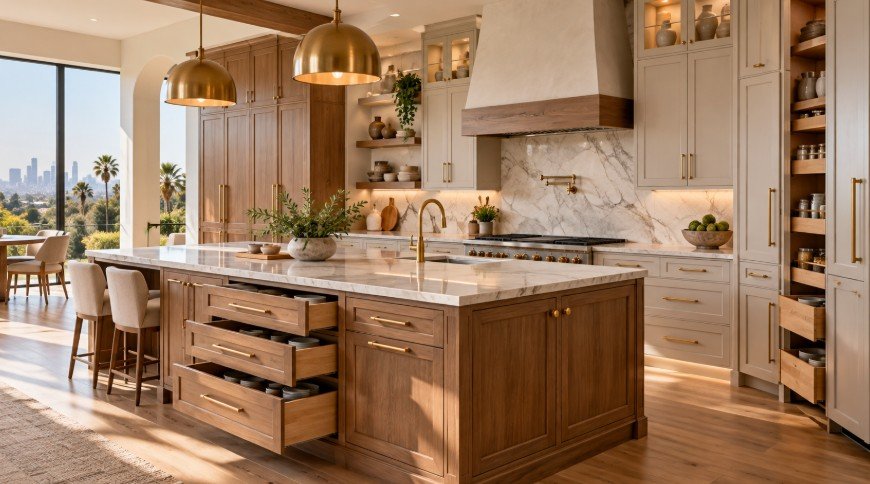
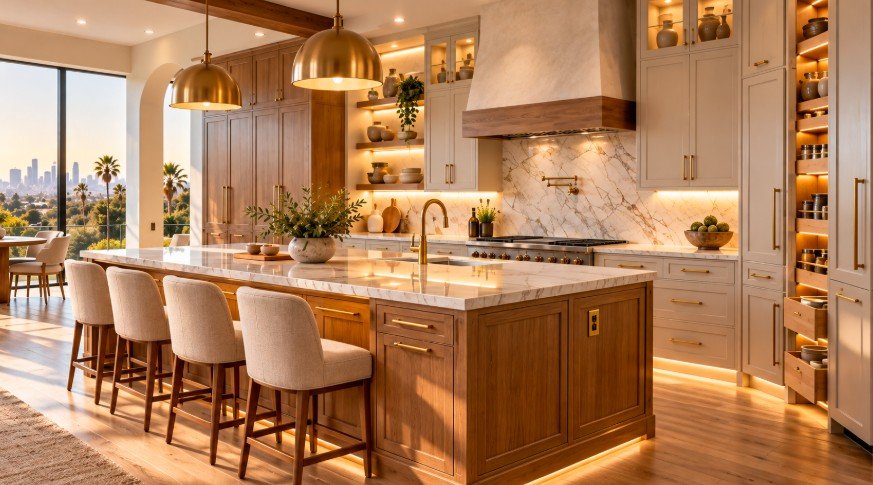
A kitchen backsplash can change the entire appearance of a kitchen while also protecting walls from water, grease, food splashes, and everyday wear. It is one of the most visible finishing elements in a remodel and often helps connect the cabinets, countertops, lighting, flooring, and appliances into one coordinated design.

Get a Free Estimate

Tell us about your kitchen. We reply within one business day.

By submitting this form, you agree to our Privacy Policy.

At LA Kitchen Remodeling and Renovation, we provide backsplash installation and replacement for full kitchen remodels, partial renovations, and targeted upgrades throughout Los Angeles. Homeowners can choose from ceramic tile, porcelain tile, subway tile, mosaics, marble, quartz, glass, slab materials, and many other finishes.

The right backsplash should complement the surrounding surfaces without making the room feel too busy. Color, texture, grout, tile size, layout pattern, countertop movement, cabinet finish, outlet placement, and lighting all influence the final appearance.

Whether you want a simple and clean backsplash or a dramatic full-height feature wall, careful planning can help create a result that feels integrated with the rest of the kitchen.

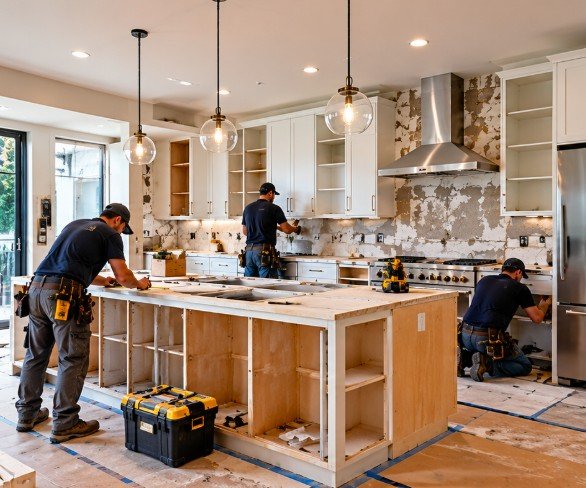
Kitchen walls stripped and prepared for a new backsplash during a remodel

Kitchen Backsplash Installation

Kitchen backsplash installation begins with proper wall preparation and accurate layout planning.

The wall surface needs to be clean, stable, and suitable for the selected material. Existing damage, loose drywall, uneven areas, or old adhesive may need to be repaired before new tile or slab material is installed.

The layout should be planned before installation begins so cuts around cabinets, outlets, windows, range hoods, and corners look balanced.

Adhesive, mortar, grout, and sealant products should be appropriate for the material being used.

After installation, grout lines, edges, transitions, and corners should be finished carefully.

A professionally planned backsplash can create clean lines and a polished connection between countertops and upper cabinets.

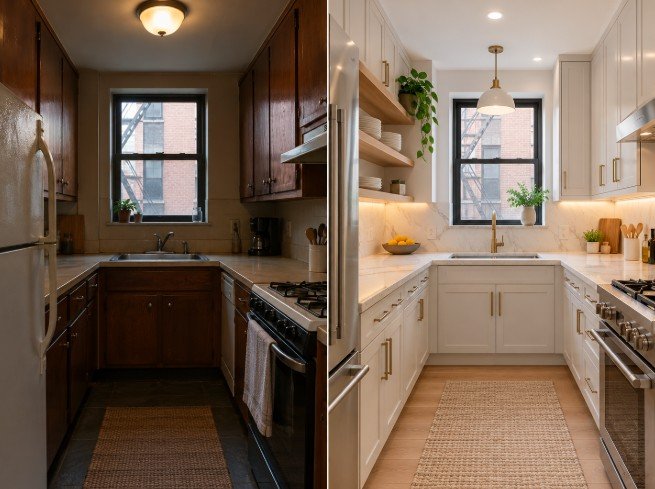
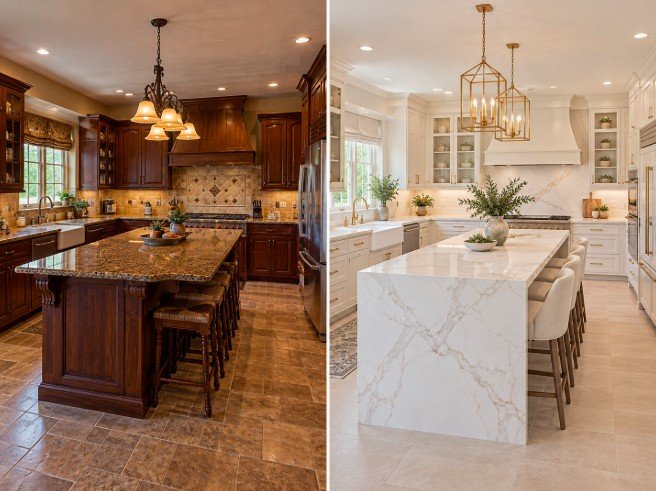
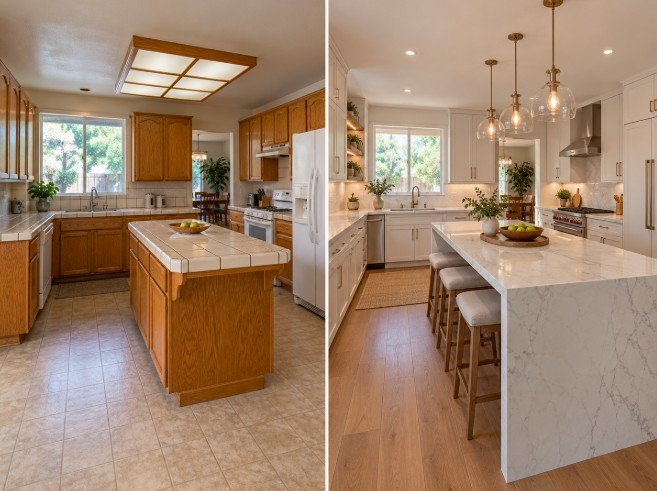
Before: dated tile backsplash with oak cabinets. After: new clean backsplash with white cabinetsBeforeAfter

Backsplash Replacement

Backsplash replacement can refresh a kitchen without changing the cabinets or countertops.

An older backsplash may be cracked, stained, damaged, outdated, or simply no longer match the desired style.

Replacement usually begins with removal of the existing tile or surface material.

The wall behind it should then be inspected and repaired before the new backsplash is installed.

Homeowners can use the opportunity to change color, texture, tile size, layout pattern, grout, and overall style.

A new backsplash can also coordinate with updated cabinet hardware, lighting, faucets, or countertops.

Even a relatively small backsplash project can create a noticeable visual change in the kitchen.

Backsplash materials we install

Tile, stone, slab, and glass options for every style and level of visual impact.

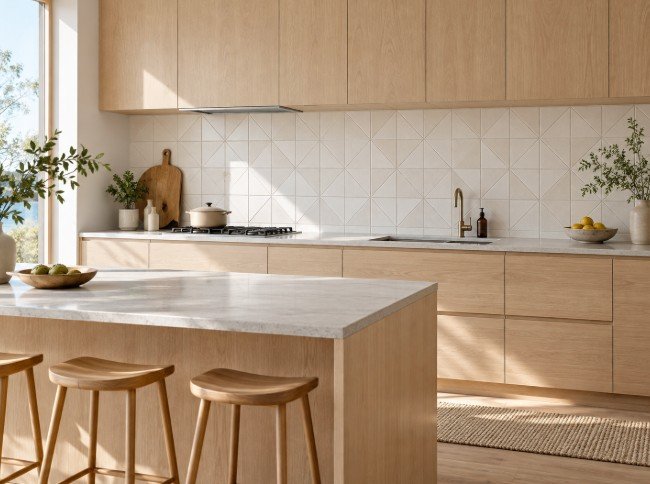
White geometric ceramic tile backsplash with light oak cabinets
Most versatile

Tile Backsplash

Tile is one of the most versatile backsplash materials because it is available in many sizes, colors, textures, patterns, and finishes.

Ceramic and porcelain tiles can be used in modern, traditional, transitional, farmhouse, Mediterranean, and contemporary kitchens.

Large tiles can create a cleaner appearance with fewer grout lines, while smaller tiles can add more texture and detail.

Tile can also imitate natural stone, concrete, handmade clay, or other materials.

The final appearance depends not only on the tile itself but also on grout color, joint width, layout pattern, edge treatment, and lighting.

A simple tile can look completely different depending on whether it is installed horizontally, vertically, stacked, staggered, or in another pattern.
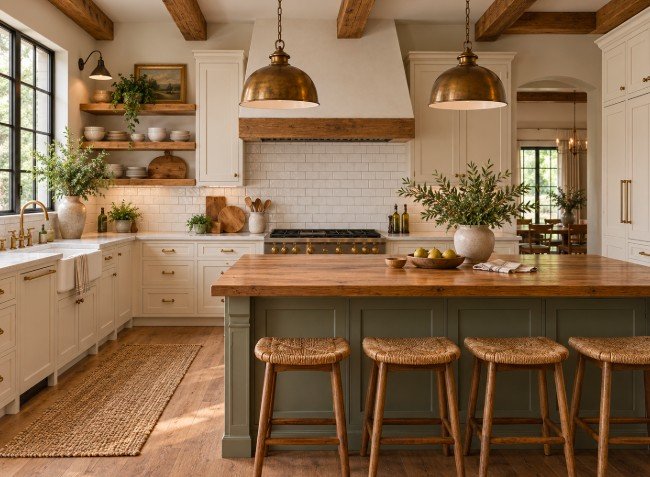
White subway tile backsplash behind the range in a farmhouse kitchen
Timeless classic

Subway Tile Backsplash

Subway tile remains one of the most popular backsplash options because it is simple, flexible, and compatible with many kitchen styles.

Classic white subway tile can create a bright and timeless look, while colored, textured, beveled, glossy, or handmade versions can create a more distinctive design.

The installation pattern also affects the final appearance.

Traditional brick layouts create a familiar look, while vertical stack, horizontal stack, herringbone, and offset patterns can make the same tile feel more contemporary.

Grout color can create either subtle blending or stronger contrast.

Subway tile works especially well with shaker cabinets, marble or quartz countertops, open shelving, and both traditional and modern hardware.

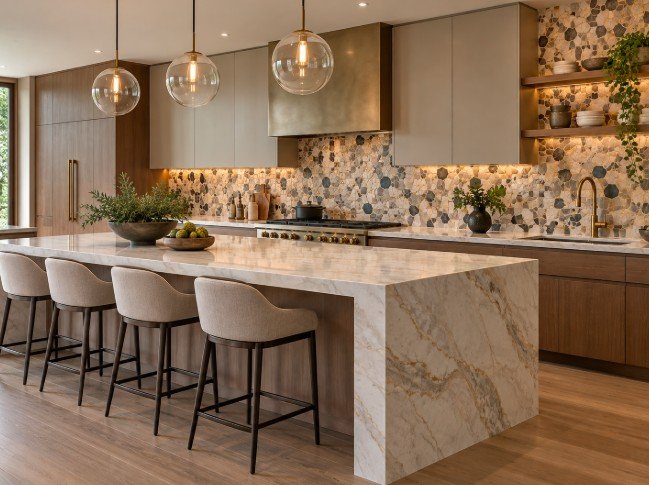
Natural stone pebble mosaic backsplash with open shelves
Decorative focal point

Mosaic Backsplash

Mosaic backsplashes use smaller individual pieces arranged on sheets or installed in detailed patterns.

They can include glass, ceramic, porcelain, stone, marble, metal, or combinations of several materials.

Mosaics can create a decorative focal point behind a range, around a window, inside a niche, or across the entire backsplash.

Because smaller pieces create more grout lines, the grout color becomes an important design element.

Some mosaics create strong patterns, while others use subtle color variation for texture without overwhelming the room.

Mosaic backsplashes can be especially effective when the surrounding cabinets and countertops are relatively simple and the kitchen needs a more decorative feature.

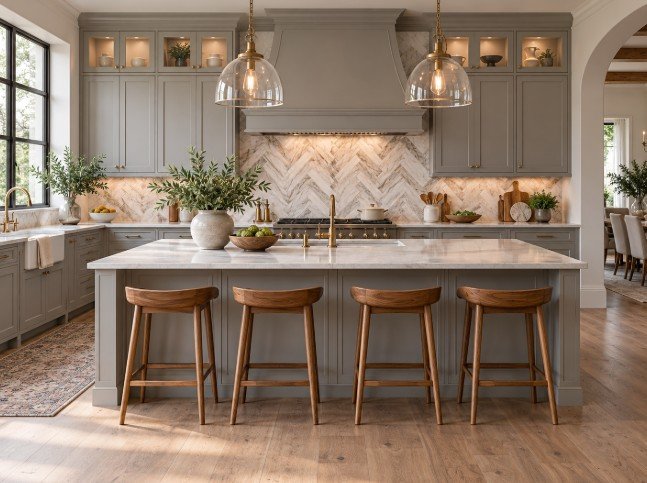
Marble herringbone tile backsplash with gray cabinets
Natural stone

Marble Backsplash

A marble backsplash can bring natural movement, elegance, and character into a kitchen.

Marble is available in slabs, large-format tiles, subway tiles, mosaics, and specialty shapes.

White marble with gray veining is popular in luxury and transitional kitchens, while warmer varieties can add beige, gold, brown, or dramatic darker tones.

Because marble is natural stone, each piece has its own variation.

This can create a rich and individual appearance, but it also means the layout should be planned carefully to coordinate veining and color movement.

Marble is more porous than some manufactured materials and may require sealing and appropriate maintenance.

It is often paired with painted cabinetry, natural wood cabinets, brass hardware, and stone countertops.

Fewer grout lines

Quartz Backsplash

Quartz can be used as a backsplash material to create a clean and coordinated appearance with quartz countertops.

Instead of using individual tiles, a quartz backsplash may be fabricated from larger slab sections.

This reduces grout lines and can create a smoother, more seamless look.

One common design approach is to continue the same quartz from the countertop up the wall, creating visual continuity.

Quartz is available in many patterns, including designs inspired by marble, concrete, and natural stone.

It can work especially well in modern and luxury kitchens where homeowners want fewer joints and easier-to-clean surfaces.

Careful fabrication is important around outlets, windows, range hoods, and cabinet edges.

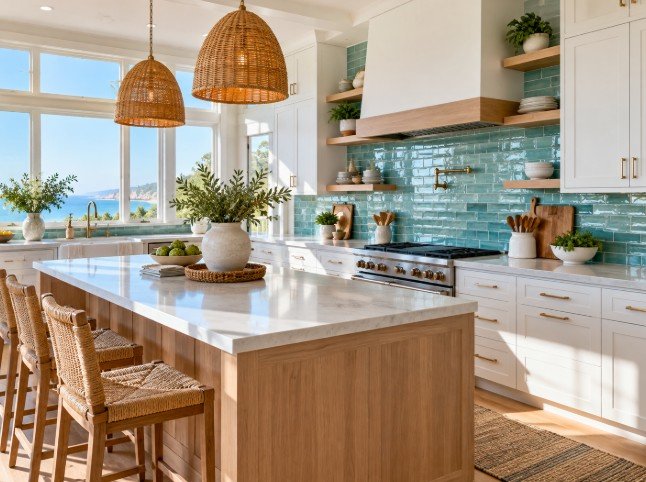
Sea glass teal subway tile backsplash in a coastal kitchen
Bright and reflective

Glass Tile Backsplash

Glass tile can add brightness, depth, and reflective quality to a kitchen.

It is available in many colors, finishes, sizes, and patterns, ranging from clear and glossy to frosted or textured.

Because glass reflects light, it can work particularly well in smaller or darker kitchens where additional brightness is desired.

Glass tiles may be installed as simple rectangular pieces, mosaics, geometric patterns, or decorative accents.

Installation requires careful preparation because the adhesive and wall surface may be more visible through certain translucent tiles.

Grout color also affects the final appearance.

Glass tile can complement modern cabinetry, stainless appliances, quartz countertops, and contemporary lighting.

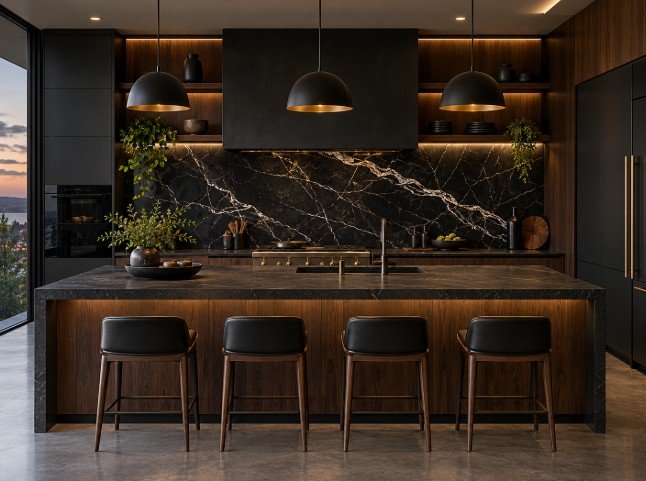
Full-height black marble slab backsplash with dramatic white veining and lit shelves

Full Height Backsplash

A full-height backsplash extends from the countertop all the way to the upper cabinets or ceiling, depending on the kitchen design.

This approach can create a dramatic and finished appearance, especially behind ranges, sinks, open shelving, or areas without upper cabinetry.

Full-height backsplashes can be made from tile, marble, quartz, porcelain, or other slab materials.

In modern kitchens, large slabs with bold veining can become a major architectural feature.

In traditional kitchens, full-height tile can provide texture and continuity.

The design should account for outlets, switches, shelves, windows, lighting, and ventilation.

When carefully planned, a full-height backsplash can make the kitchen feel more cohesive and visually complete.

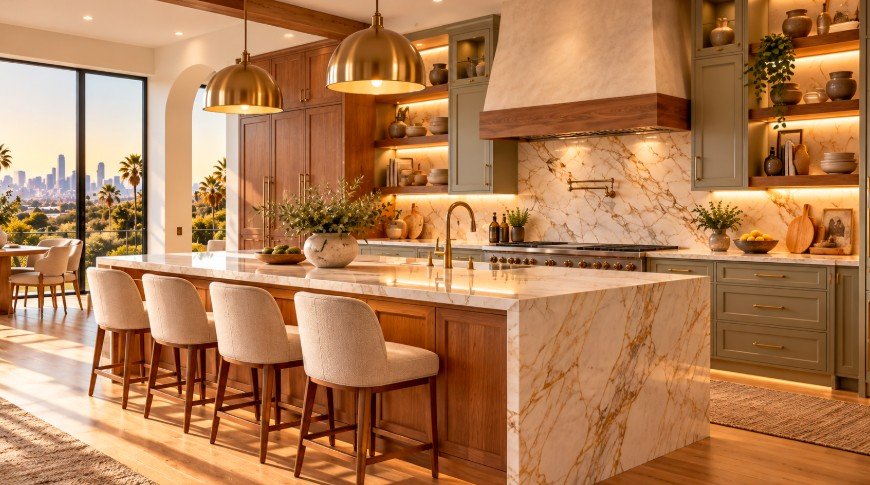
Marble backsplash paired with sage green cabinets and warm wood shelves

Choosing the Right Backsplash Material

The best backsplash material depends on the style of the kitchen, maintenance preferences, countertop pattern, cabinet color, and desired level of visual impact.

If the countertop has strong veining or a detailed pattern, a simpler backsplash can help create balance.

If the countertop is subtle, a more decorative tile or mosaic may become the focal point.

Glossy surfaces can reflect more light, while matte or textured materials can create a softer appearance.

Natural stone provides variation and character, while manufactured materials can offer more consistent patterns.

The backsplash should also be practical for cooking areas where cleaning and stain resistance are important.

Backsplash Colors and Patterns

Color and pattern have a major effect on how a backsplash changes the room.

White and cream backsplashes can make the kitchen feel brighter and cleaner.

Gray, beige, and warm neutral tones can create a softer transition between cabinets and countertops.

Darker backsplash colors can add contrast and drama, especially in larger kitchens.

Green, blue, and other colored tiles can bring more personality into the design.

Pattern can range from simple horizontal rows to herringbone, chevron, vertical stack, basketweave, hexagon, or geometric layouts.

The right pattern should complement the cabinet style and countertop movement rather than competing with them.

Backsplash Grout Selection

Grout color can dramatically change the finished appearance of tile.

A grout color close to the tile color creates a more continuous and subtle surface.

Contrasting grout highlights the shape of each tile and can make the installation pattern more noticeable.

White tile with dark grout creates a strong graphic effect, while white or light grout creates a softer and cleaner appearance.

Maintenance should also be considered.

Some grout colors show staining more easily than others.

Depending on the material and installation, sealing may be recommended to help protect the grout.

The grout joint width should also be selected to suit the size and style of the tile.

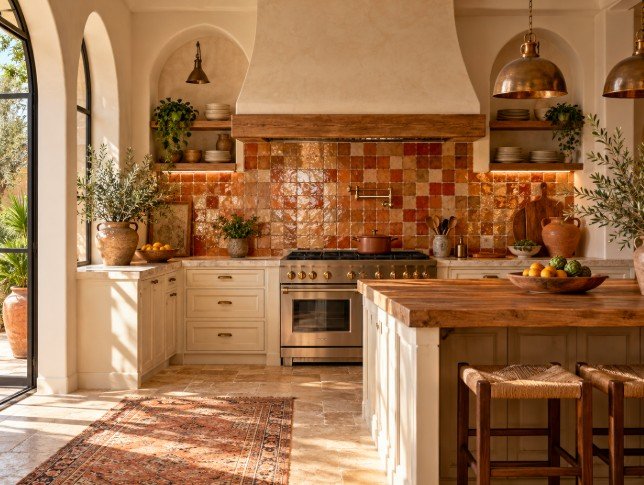
Handmade terracotta tile backsplash behind the range under a plaster hood

Backsplash Around the Range

The area behind the range is often one of the most visible parts of the backsplash.

It can be designed to match the rest of the backsplash or become a separate focal feature.

Some homeowners use a larger slab, decorative mosaic, framed pattern, or different tile layout behind the cooking area.

The backsplash should also coordinate with the range hood.

If the hood is a major design feature, the wall material behind it can help frame and emphasize the area.

Because this section is exposed to cooking splashes and heat, the selected material should be appropriate for the location and relatively easy to clean.

Before: dated tile around a kitchen window. After: marble backsplash wrapping the window openingBeforeAfter

Backsplash Around Windows

Kitchen windows can create interesting opportunities and challenges for backsplash installation.

Tile or slab material may need to be carefully cut around window trim, sills, or surrounding cabinetry.

In some designs, backsplash material can extend directly around the window opening for a cleaner and more integrated look.

In others, painted trim may remain as a visual border.

Alignment is especially important because uneven cuts are more noticeable around windows.

The pattern should be planned so the installation feels balanced on both sides.

Natural light can also change the appearance of glossy, glass, marble, and textured backsplash materials throughout the day.

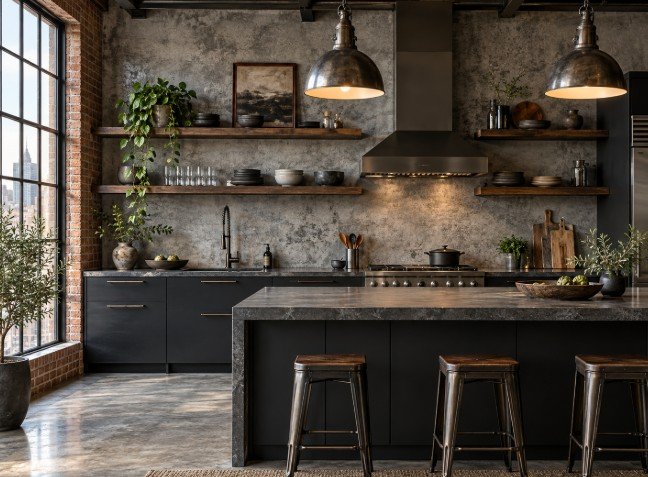
Textured plaster backsplash behind reclaimed wood open shelves in an industrial kitchen

Backsplash with Open Shelving

Open shelving can create an opportunity to make the backsplash more visually prominent.

Without upper cabinets covering the wall, tile or slab material may extend higher and become a major design element.

Full-height marble, quartz, porcelain, or decorative tile can provide a strong background for wood or metal shelves.

The shelf material and hardware should coordinate with the backsplash.

For example, warm wood shelves can soften a white stone wall, while black metal shelves can create contrast against light tile.

The installation should also consider mounting points so shelving hardware can be securely attached without damaging the finished backsplash.

Designing the backsplash with the whole kitchen

The best backsplashes are chosen together with the countertops and cabinets around them.

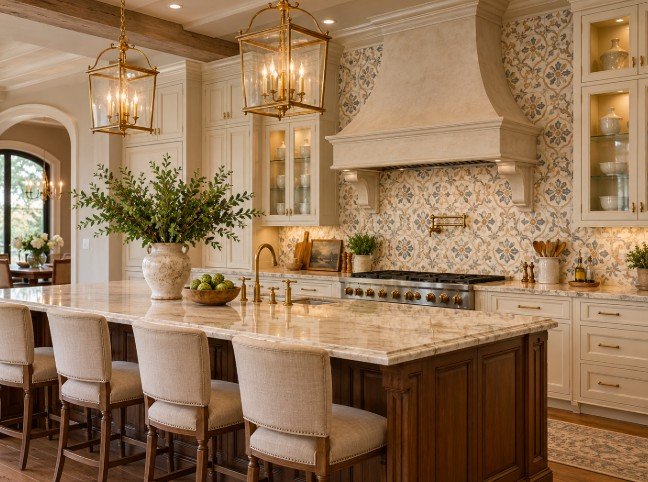
Patterned blue and cream tile backsplash paired with a subtle marble countertop

Backsplash and Countertop Coordination

The backsplash and countertop should work together as part of one design.

If both surfaces have bold patterns, the kitchen can become visually busy.

A dramatic quartzite or marble countertop may look better with a simple tile backsplash.

A plain quartz countertop can create more freedom for decorative mosaics or patterned tile.

Another option is to continue the countertop material up the wall for a coordinated slab backsplash.

Undertones should also match.

Warm countertops generally pair well with cream, beige, warm white, or earthy backsplash colors, while cooler countertops may work better with gray, crisp white, blue, or cooler neutrals.

Natural wood cabinets paired with a warm marble backsplash and brass hardware

Backsplash and Cabinet Coordination

Cabinet color and style have a strong influence on backsplash selection.

White cabinets can work with almost any backsplash, from simple subway tile to dramatic marble.

Natural wood cabinets often pair well with warm stone, textured tile, or neutral colors.

Dark cabinets can be balanced with lighter backsplash materials to prevent the room from feeling too heavy.

Shaker cabinets typically coordinate well with classic tile designs, while flat-panel cabinets may work better with large-format tile or slab backsplashes.

Hardware color can also influence the design.

Brass, black, chrome, and nickel accents can each create a different relationship with the backsplash.

Warm under-cabinet lighting highlighting a marble backsplash

Lighting for Kitchen Backsplashes

Lighting can significantly affect how backsplash materials appear.

Under-cabinet lighting helps illuminate the work surface while also highlighting the tile, stone, or slab material.

Glossy tile and glass may reflect more light, while textured and matte materials create softer shadows.

Natural stone can reveal different veining and color variations depending on the lighting temperature.

Warm LED lighting may emphasize beige and gold tones, while cooler lighting may make white and gray surfaces appear sharper.

Lighting should be considered before the backsplash is selected so the material looks good under both daytime and evening conditions.

Before: busy tile backsplash in a traditional kitchen. After: full marble backsplash in a remodeled white kitchenBeforeAfter

Backsplash Installation During a Full Kitchen Remodel

During a complete kitchen remodel, backsplash installation is usually coordinated with cabinets, countertops, electrical work, plumbing fixtures, range hoods, and under-cabinet lighting.

The backsplash is typically installed after the countertops are in place so the lower edge can meet the finished countertop accurately.

Electrical outlets and switches should already be positioned.

Range hoods, floating shelves, and other wall-mounted features should also be planned in advance.

Coordinating these details helps avoid unnecessary cuts and changes after the backsplash has been installed.

A well-organized sequence creates cleaner transitions between the different materials and components of the kitchen.

Upgrade Your Kitchen with a New Backsplash

A new backsplash is one of the most effective ways to add personality, texture, and a finished appearance to a kitchen.

Whether you prefer classic subway tile, detailed mosaics, natural marble, quartz slabs, glass tile, or a dramatic full-height backsplash, the design should complement the rest of the room.

LA Kitchen Remodeling and Renovation can help coordinate backsplash materials with cabinets, countertops, lighting, flooring, appliances, and the overall kitchen style.

From removal of an outdated backsplash to surface preparation and installation of the new material, each stage can be planned carefully to create a clean and cohesive result.

The right backsplash can protect the walls while becoming one of the most memorable design features in the entire kitchen.

Call (323) 345-4855

Get a Free Backsplash Estimate

Tell us about your kitchen. We reply within one business day.

By submitting this form, you agree to our Privacy Policy.